The Best Time to Visit Mount Batur: Season, Month and Hour
In this guide
- The short answer
- Dry season, April to October
- Wet season, November to March
- What happens when weather cancels your tour
- Which months are busiest?
- Sunrise or sunset?
- Does the moon matter?
- Nyepi, Galungan and the days Bali stops
- What time is sunrise, month by month?
- Is a cloudy summit still worth it?
- What the seasons do to the trail
- If the forecast is against you
- How far ahead to book
- Frequently asked
The short answer
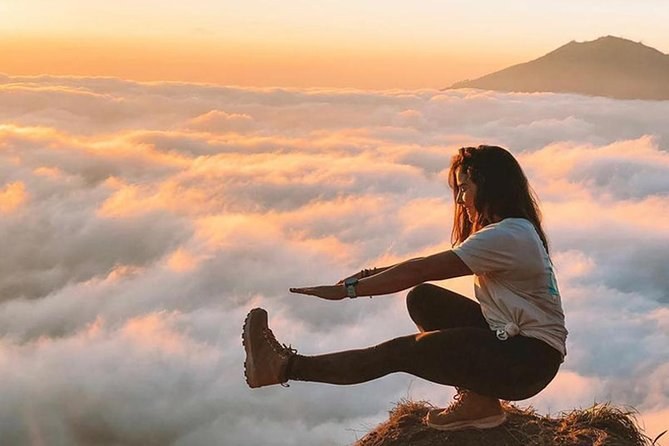
Come between April and October if the view is the point. Bali's dry season gives you materially better odds of the clear dawn you are paying for, and the difference is not marginal. Within that window, avoid the busiest weeks if the crowd bothers you more than the cloud does.
Nothing about the volcano itself changes with the season. It is open every day, there is no closed period, and departures run year round. What changes is what you can see from the top.
Dry season, April to October
These are the months to aim for. Mornings are clearer, the trail is firmer underfoot, and the odds of standing above a sea of cloud rather than inside one are at their best. July, August and September are the peak of it in every sense: clearest skies, most people.
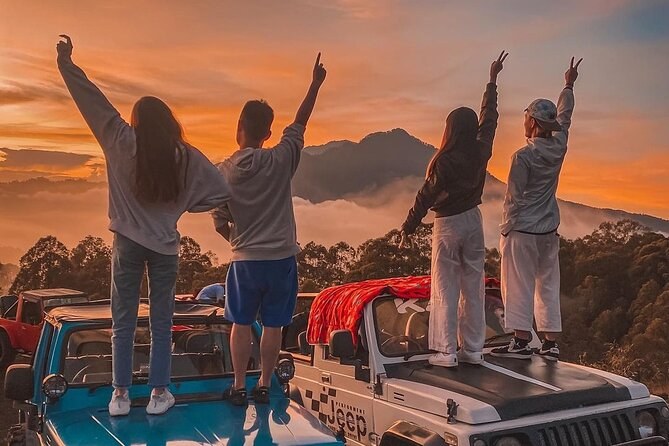
The trade-off is company. A clear dry-season morning puts a hundred people or more on the summit for the twenty minutes either side of sunrise. Guides who know the mountain start their groups a few minutes early to get ahead of that, and travellers notice the difference.
Wet season, November to March
Rain in Bali is usually an afternoon and evening business, which means a pre-dawn climb is not automatically a wet one. Travellers do get clear January mornings and say so. But cloud sits on the rim far more often, and one traveller was told by their driver that it had rained almost every morning at Batur for over a month.
The trail is also looser and more slippery when wet, particularly on the descent, and this is the season when the raincoat some operators include earns its place.
Book the flexible option in the wet season. Every departure here refunds in full up to 24 hours ahead, so booking two days out and watching the forecast costs you nothing — and if the operator cancels for weather, twelve of them rebook or refund you. The visiting page sets out which.
What happens when weather cancels your departure
Twelve of the listings here carry an explicit weather clause: if the operator cancels because conditions are unsafe, you are offered another date or a full refund. That is the operator cancelling, not you.
What is not covered is a departure that runs into cloud. If the jeeps go up and the summit is grey, the tour happened. This is the single most important thing to understand before you book in December, and it is why the free-cancellation window at 24 hours matters more than any other term.
Which months are busiest?
July through September, followed by the Christmas and New Year fortnight. In those weeks the summit at sunrise carries a crowd, the hot springs fill after sunrise, and the popular departures sell out several days ahead.
April, May, June and October are the sweet spot: dry-season weather with noticeably fewer people. If you have any flexibility at all, those four months are the ones to aim for.
Sunrise or sunset?
One departure here climbs in the afternoon and comes down by flashlight. It is a genuinely different proposition and it suits people the sunrise trek does not.
| Sunrise | Sunset | |
|---|---|---|
| Pickup | 01:00 – 03:30 | Early afternoon |
| People at the top | Often a hundred or more | About fifteen |
| Cloud risk | Lower — mornings are clearer | Higher — cloud builds through the day |
| The descent | In daylight | By flashlight, after dark |
| Departures available | Nearly all | One |
| Suits | Anyone who can face the alarm | Late risers, crowd-avoiders |
The two directions, compared on what actually differs.
The honest summary: sunset gives you the mountain almost to yourself and worse odds on the view. Sunrise gives you the better odds and the crowd.
Does the moon matter?
Not for what you see at dawn, but it does change the walk. A full moon on a clear night lights the trail well enough that head torches become a formality, and the caldera below you is visible the whole way up rather than a black void with lights in it.
No listing here prices by moon phase or closes for it, unlike some other night-time attractions. If you have a choice and you like the idea of walking by moonlight, it is a small bonus rather than a deciding factor.
Nyepi, Galungan and the days Bali stops
Nyepi, the Balinese day of silence, shuts the entire island for 24 hours: no flights, no traffic, no tours, and lights off after dark. It falls in March, moves each year, and no departure runs on it or on the morning after it begins. Check the date against your trip before booking anything at all.
Galungan and Kuningan, ten days apart and recurring roughly every 210 days, do not stop tours but do change the roads and the mood, with ceremonies and family travel across the island. Guides may be fewer and traffic heavier.
What time is sunrise, month by month?
Consistently around six o'clock, moving perhaps twenty minutes across the year. Bali sits about eight degrees south of the equator, so day length barely changes — which is why every operator here builds the same 03:30 start into every month of the calendar rather than shifting it seasonally.
What does shift is the light. In the dry season the sky separates from the horizon cleanly and the sea of cloud sits below you; in the wet season the transition is softer and the cloud is more often at your level.
Is a cloudy summit still worth it?
Travellers who got one say yes, almost without exception. Their reviews describe thick fog and no view, and then describe the climb, the guide and the eggs cooked in the steam as worth the morning anyway. One put it simply: nobody controls the weather.
That is worth holding on to when you book. You are buying a night walk up an active volcano with breakfast at the top. The sunrise is the headline, and on a proportion of mornings it does not arrive.
There is also a consolation that nobody puts in the brochure. Cloud below you is the photograph; cloud around you is weather. The two are separated by a few hundred metres of altitude, and on plenty of grey mornings the group that kept walking came out above it while the viewpoint stayed in the murk.
What the seasons do to the trail itself
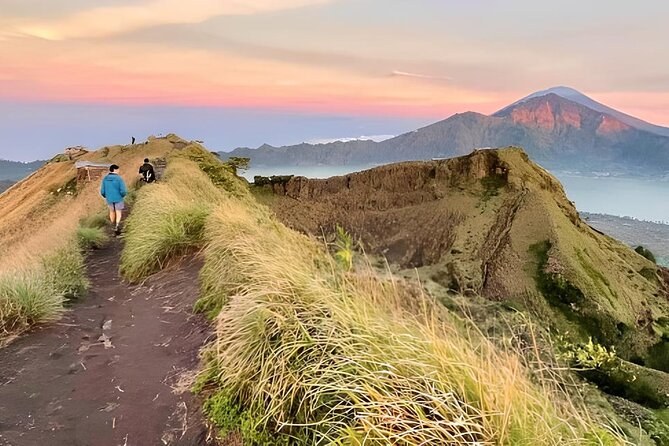
The climb changes with the weather as much as the view does. In the dry months the scoria is loose and dusty, which is tiring going up and slippery coming down, and the descent is where most travellers notice it. After rain the same surface packs down and grips better underfoot, which is the one genuine argument in favour of a wet-season morning.
What rain takes away is everything else. Wet rock, poor visibility, and a guide's raincoat that only helps so much. Several operators include one for exactly this reason, and on a wet-season booking it is worth checking whether yours does.
If the forecast is against you
A grey week does not have to cost you the volcano. Three things still work when the summit is unreliable, and all of them are on the same mountain.
The caldera rim in daylight is not weather-dependent in the same way: cloud sits at summit height far more often than it fills the bowl, and the view across from Penelokan holds up on days when the top does not. The hot springs on the lake shore are pleasant in rain and arguably better in it. And the sunset departure gives you a second window in the same day if the morning was written off.
The other option is simply to rebook. Every departure listed refunds in full up to 24 hours ahead, so a forecast that turns three days out costs you nothing but the rearranging.
What is worth resisting is the temptation to go anyway on the last morning of your trip because it is the only slot left. That is the booking most likely to end in a grey summit and a long drive, and it is also the one you cannot rebook. If the volcano matters to you, put it early in the trip and keep a second morning in reserve; the fares here start at $20, which makes a second attempt cheaper than most people assume.
How far ahead to book
Two or three days is right for most of the year, because pickups are assigned by area the evening before and free cancellation runs to 24 hours. In July, August, September and over the new year, book a week ahead for the popular departures.
In the wet season, book late and watch the forecast: the flexibility is free and it is the only lever you have. The FAQs cover what happens if you cancel inside the window.
Frequently asked
What is the best month to climb Mount Batur?
April to October gives the clearest mornings, and April, May, June and October add fewer people to that. July through September are the clearest of all and the busiest.
Can you climb Mount Batur in the rainy season?
Yes, and departures run all year. Rain in Bali is mostly an afternoon and evening pattern, so a pre-dawn climb is often dry, but cloud on the rim is far more likely between November and March.
Does Mount Batur close at any time?
There is no closed season and no gate. The one date to check is Nyepi in March, when the whole island shuts for 24 hours and no tour runs.
Will I definitely see the sunrise?
No. Cloud sits on the rim on plenty of mornings and no fare refunds it. Booking in the dry season and keeping the 24-hour cancellation window open is how you improve the odds.
Is it colder in some months?
The summit is cold before dawn all year and the difference between months is small. Bring a jacket in every season; travellers who did not are the ones who mention the cold in their reviews.
Every guided way up the volcano is compared on price, pickup zone and what the fare covers: bali mount batur jeep tour. The full list sits on Mount Batur Tours.
Tours that fit this guide
The sunset alternative, and two departures with the flexibility a wet-season booking wants.